Kdp Coloring Numbers for Kids: A Practical Guide for Creators and Educators
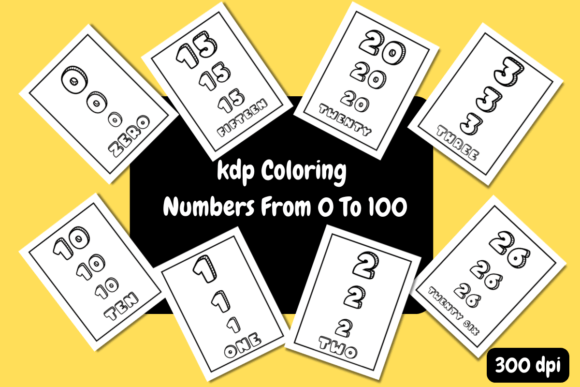
In the bustling world of self-publishing and educational resources, finding assets that balance quality with ease of use is a constant challenge. For creators looking to enter the children's activity book market, Kdp Coloring Numbers for Kids offers a streamlined solution. These are not just random graphics; they are specifically designed black and white number cards ranging from 0 to 100. Each card features a large, clear font intended to make number recognition effortless for young learners. Whether you are an entrepreneur building a passive income stream or an educator seeking engaging classroom materials, understanding how to leverage these assets can transform your workflow.
The Core Value of High-Quality Number Cards
The primary appeal of these digital files lies in their simplicity and effectiveness. When designing a coloring book for toddlers or early elementary students, clarity is paramount. Small, cluttered fonts often frustrate young children who are still developing fine motor skills and visual processing abilities. The Kdp Coloring Numbers for Kids collection addresses this by utilizing a bold, uncluttered typeface. This design choice ensures that when a child picks up a crayon, the target is unmistakable.
Furthermore, the black and white format is essential for the coloring book genre. It provides a clean canvas that allows children to express their creativity without the distraction of pre-printed colors. For publishers using Amazon KDP (Kindle Direct Publishing), having high-resolution PNG files ready for upload eliminates the need for time-consuming vector tracing or image editing. You can take these files directly into your layout software, arrange them on 8.5x11 inch pages, and prepare your manuscript for printing with minimal friction.
Why Large Fonts Matter for Early Learners
From an educational perspective, the size of the numbers plays a critical role in cognitive development. Young children often struggle with distinguishing between similar-looking digits like 6 and 9, or 2 and 5. By presenting these numbers in a large, isolated format, the resource helps isolate the learning objective. It reduces cognitive load, allowing the child to focus entirely on the shape and identity of the digit before attempting to color within the lines. This approach supports the transition from abstract concepts to concrete understanding, making it a valuable tool for parents and teachers alike.
Real-World Applications for Creators and Educators
The versatility of these number cards extends far beyond a single use case. Different users can apply these assets in various professional and personal settings to achieve specific goals.
- Self-Publishing Entrepreneurs: For those looking to generate passive income through Amazon KDP, speed to market is crucial. Instead of spending weeks designing individual number pages, creators can utilize these pre-made PNGs to assemble a complete "Learn to Count" workbook in a fraction of the time. The consistent style across all 101 cards ensures a professional look throughout the interior, which is vital for maintaining positive customer reviews.
- Homeschooling Parents: Parents managing multiple subjects at home often need quick, printable activities. Downloading these files allows them to print custom worksheets tailored to their child's current learning stage. If a child is struggling with numbers 1–20, a parent can print just those pages, saving paper and focusing effort where it is needed most.
- Preschool Teachers: In a classroom setting, consistency aids in lesson planning. Teachers can create uniform workbooks for their entire class or use individual cards as flashcards during circle time. The eye-catching nature of the designs keeps students engaged, turning a potentially dry math lesson into an interactive coloring session.
- Graphic Designers and Hobbyists: Even those not publishing books can use these assets for scrapbooking, party favors, or educational blogs. The high-quality PNG format ensures that the images remain crisp whether printed on standard office paper or specialty cardstock.
Strategic Use Cases in Business and Education
When integrating Kdp Coloring Numbers for Kids into a broader project, the context matters. Consider a scenario where a small business owner wants to launch a line of educational products. By bundling these number cards with other themed activities—such as counting animals or shapes—they can create a comprehensive "Math Starter Kit." The clear font acts as the anchor for the product, ensuring that even if the surrounding illustrations are complex, the core learning element remains accessible.
For educators working with diverse learning needs, the simplicity of these cards is particularly beneficial. Children with dyslexia or visual processing disorders often require larger text and reduced visual noise. The black and white, high-contrast nature of these cards aligns perfectly with these requirements. By using these resources, teachers can provide inclusive materials that allow every student to participate fully in numeracy activities without feeling overwhelmed.
Additionally, the 8.5x11 inch sizing is a standard industry specification. This means that when you upload your final PDF to KDP, there is no risk of scaling errors or margin issues. The files are ready to be placed exactly where they need to be, ensuring that the bleed and trim areas are respected. This technical precision saves hours of troubleshooting during the proofing phase, allowing creators to focus on marketing and distribution rather than formatting headaches.
What to Consider Before Using These Resources
While these assets offer significant advantages, thoughtful consideration is necessary to maximize their potential. First, always verify the licensing terms associated with the files. Ensure that the license permits commercial use if your intention is to sell the finished book on platforms like Amazon KDP. Some free resources are limited to personal use only, which could lead to legal complications down the line.
Secondly, consider the age group you are targeting. While numbers 0 to 100 cover a broad range, a toddler might find numbers above 20 too advanced, while a first grader might find single digits too simple. You may need to curate the selection based on your specific audience. For instance, a book titled "First Steps in Math" might only include numbers 0–20, whereas a "Summer Math Review" could utilize the full 0–100 range.
Finally, think about the overall aesthetic of your project. Although the cards are visually appealing on their own, they should complement any additional elements you add. If you plan to add decorative borders or background patterns, ensure they do not detract from the clarity of the numbers. The goal is to maintain the focus on the numerical skill being practiced. A busy background can sometimes interfere with the child's ability to stay within the lines, defeating the purpose of the large, clear font.
Maximizing Engagement Through Interaction
To truly help a child develop numerical skills, the activity must be more than just coloring. Encourage interaction by asking questions as they work. "Can you find the number 5?" or "How many times did you color the number 7?" turns a passive activity into an active learning experience. The visual appeal of the Kdp Coloring Numbers for Kids serves as the hook, but the engagement comes from the guidance provided by the adult or teacher. By combining these high-quality visuals with intentional teaching strategies, you create a powerful tool for early childhood development.
Ultimately, whether you are building a portfolio of digital products or simply looking for a way to support a child's education, these number cards provide a reliable foundation. They bridge the gap between creative expression and academic growth, offering a practical, efficient, and effective solution for modern creators and educators.